What the people building the future are actually saying. We read their posts, talks and interviews each week, so you do not have to.
Edition 7week of 20 July 202613 min read
01Tech-landscape mood
↘ cooling vs last week
Cautiously optimistic
78 / 100 bullishness
BearishNeutralBullish
The readThe room is still bullish on the technology and newly serious about the rules around it, which is why the board reads cautiously optimistic rather than euphoric. Read the six-point drop carefully: it is mostly composition, not a change of heart. Dario Amodei re-enters the board at 45 on an honestly-dated June essay (he has published nothing since), and Sundar Pichai had a thin week in his own voice. Nobody who was scored last week moved more than six points.
02The voices
8 operators · one convictionscroll →
Demis Hassabis
Google DeepMind
Optimistic→steady
Publishes the week's most consequential document: a FINRA-style Frontier AI Standards Body with pre-release model review, arguing AGI is a few short years away and the field is currently moving faster than its own understanding.
If you stop to think about it, we've essentially found a way to make sand think. It's miraculous.
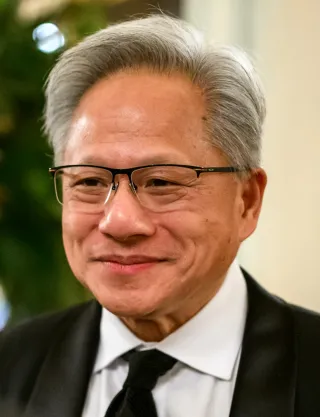
In Tokyo to launch what NVIDIA calls the world's first national AI infrastructure, and selling it as the sequel to the personal computer: forty years on, everyone gets their own personal AI.
Forty years ago was the beginning of the PC revolution. Now, forty years later, instead of a personal computer, you can now have your own personal AI.
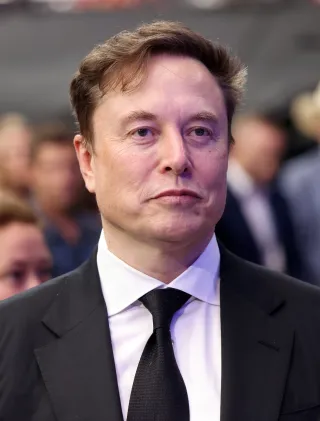
Pushes Grok Build as a full agentic development environment and competes purely on price and efficiency, while staying conspicuously out of the governance argument everyone else joined.
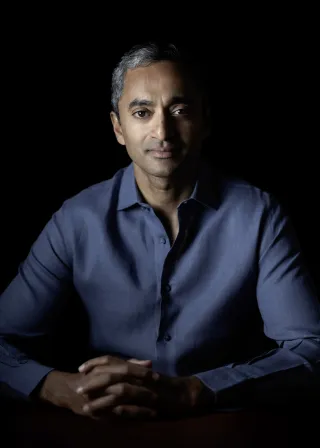
Backs Demis's framework while attacking what he sees as regulatory capture behind it, and makes the week's sharpest economic argument: open weights have split the price of the same intelligence by a hundred times.
As usual, Demis is quite well reasoned and his framework is very reasonable.
Calls the Hassabis proposal thoughtful, then draws his own line against safety-by-fear, and pairs a rare public admission that the last year was not OpenAI's best with a hard push on price and agent usage.
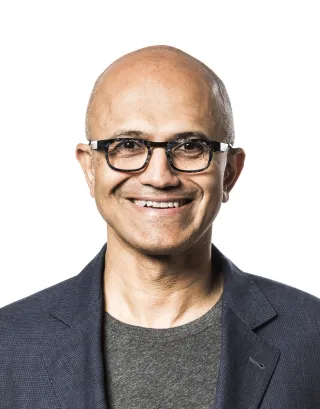
Endorses the framework in the language of systems risk: the goal is an ecosystem that keeps innovation and choice while making sure no single model release can break the world.
An important piece from Demis. We need more of this kind of thinking.
Backs the framework and quietly notes he proposed something similar three years ago, then publishes the week's best evidence that AI is already load-bearing: 1.7 million health conversations across 109 countries.
Fully support this important proposal from @demishassabis. The time for us all to act is now.
A thin week in his own voice: a two-line endorsement of his own DeepMind chief and a customer win at Intel, with Google's louder signals coming from the org rather than the CEO.
The voice keeping the week from tipping into pure euphoria.
Dario Amodei
Anthropic
Absent from the argument he arguably started. Silent on X since 10 June and nothing new published in the window, his standing position remains the harder one: not a self-regulator, but mandatory testing with the power to block a release.Cautious
04The takeaway
This week’s read · NextAura
Ten people who agree on almost nothing spent this week agreeing on a referee. That is the story.
On Tuesday Demis Hassabis proposed a standards body for frontier AI. Within hours Sundar Pichai, Sam Altman, Mustafa Suleyman, Satya Nadella and Chamath Palihapitiya had all backed it in public. In the same week the price of frontier-class intelligence split by a factor of a hundred. Those are not two stories. They are one.
In 1938, after a mid-air collision over Wyoming killed everyone aboard both aircraft, the American airline industry did something that looked like commercial suicide and turned out to be the opposite. It asked to be regulated. The carriers had worked out that nobody would buy a ticket for a machine the public did not trust, and that trust was not something any single airline could manufacture on its own. On Tuesday this week, in an essay published to X, Demis Hassabis made the 2026 version of that argument. What happened next is the part worth paying attention to: within about six hours, four of his fiercest competitors publicly agreed with him.
The big conversation: everyone suddenly wants a referee
Hassabis's proposal is specific, which is what makes it interesting. He wants a Frontier AI Standards Body, modelled explicitly on FINRA, the industry-funded self-regulator that polices American stockbrokers. Frontier labs would voluntarily hand models over for review up to 30 days before release, and once the testing regime proved itself, that voluntary step would become a requirement to sell into the US market. Underneath it sits a claim he does not hedge: AGI is probably a few short years away, and advances on the frontier are outpacing our understanding of the technology. This is not a man talking down his own field. The same essay calls the technology closer to fire or electricity than to the internet, and includes the best sentence anyone wrote this week about what has actually been built.
We've essentially found a way to make sand think. It's miraculous.
Industries do not agree on rules because they have had a moral awakening. They agree when the rules become worth more than the thing the rules constrain. And that is exactly what the rest of the week was quietly demonstrating.
Where they disagree: FINRA or the FAA
The consensus is a mile wide and about an inch deep. Hassabis is proposing a self-regulatory organisation: industry-funded, industry-staffed at first, voluntary before it is binding. There is a competing proposal on the table, and its author said nothing at all this week. Five weeks ago, in an essay called Policy on the AI Exponential, Dario Amodei wrote that transparency was no longer enough and that frontier models should face mandatory third-party testing for cyber, bio, and autonomy risks, with the power to block or revoke a deployment outright. That is not a FINRA. That is closer to an FAA: a public agency that can ground the fleet. Amodei has been silent on his feed since 10 June and published nothing in this window, so he has not answered Hassabis. The gap between a body the labs fund and a body that can stop them is the entire argument, and it is currently being had by one side.
The quiet signals: the price of thinking fell through the floor
Here is the number that explains the sudden enthusiasm for rules. Palihapitiya, arguing that America must not close the door on open weights, pointed out that the same frontier-class intelligence can now be bought for either fifty cents or fifty-six dollars per million tokens, depending on whose you use. His framing was geopolitical: letting our adversaries attack us for $0.50 per 1MM tokens while we spend $26-56 per 1MM tokens to defend ourselves is equally ruinous, it's the Cold War Soviet collapse in reverse. Set that beside Altman boasting that GPT-5.6 Sol now costs a fraction of its rivals, and Musk competing on tokens-per-task, and you can see the shape of it. Raw intelligence is deflating faster than almost any input in economic history. When the product commoditises, the moat moves. It moves to distribution, to trust, and to the licence to operate. A standards body is not only a safety measure. It is also the last durable barrier to entry in a market where the thing being sold gets cheaper every quarter.
Strip out the geopolitics and this week hands an Australian small business two facts that point in opposite directions, which is why it is worth slowing down over. First, the intelligence you are buying is getting dramatically cheaper, and the gap between the expensive option and the cheap one is now roughly a hundred times for broadly comparable work. Anyone who signed a long, expensive AI contract last year should be re-reading it. Second, the industry is building a rulebook, and rulebooks always flow downhill. They start with the labs, then reach the vendors, then arrive in your quotes, your privacy policy and your customer disclosures. The EU's transparency rules begin biting from early August, and while that is a European law, it will shape what every serious vendor offers globally, the way European privacy law quietly rewrote Australian websites a decade ago. The businesses that get hurt are the ones who cannot say where their AI came from or where their customer data went. The ones who can will find that answer becoming a selling point, because when everyone has the same cheap intelligence, the only scarce thing left is trust.
That is the work we do at NextAura. We read the week so you do not have to, then help Australian small businesses act on the part that actually reaches them: paying the right price for intelligence that keeps getting cheaper, getting the messy knowledge out of people's heads and into systems they own, and being able to answer plainly where the AI in their business came from. The people building this technology spent the week asking to be held to a standard. That instinct is worth borrowing, because in a market where the intelligence is nearly free, being the business a customer can trust is the last thing that is genuinely yours. If you want a hand turning this week's signal into something running by next week, get in touch.
We log them now and revisit them later: a running ledger of the bets these operators are making out loud.
Demis Hassabis: A formal frontier-AI standards body along the lines Hassabis describes (industry-funded, pre-release model review, US-initiated) is publicly proposed in legislation or stood up as a voluntary consortium, with at least three major labs signing on to pre-release testing.within 2 years
Chamath Palihapitiya: The price gap between open-weight and closed frontier-class intelligence stays at roughly an order of magnitude or wider, and open weights become the default for high-volume routine work, with closed frontier models retreating to the hardest tasks.within 18 months
Jensen Huang: Sovereign AI becomes a standard national procurement category rather than a novelty: following Japan, several more governments announce national AI infrastructure programmes built on NVIDIA systems within the year.within 12 months
Sam Altman: Altman's bet on the coming year is checkable: by July 2027 OpenAI should be able to point to a twelve-month stretch that clearly beats the previous one on model leadership and revenue, or the admission that the last year was not their best will read as the turning point instead.by July 2027