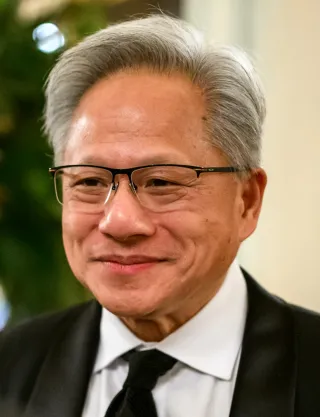
Jensen Huang
NVIDIA
Bullishsteady
Declares the age of agents has arrived and ramps Vera Rubin into full production at GTC Taipei.
Today we can say that agentic AI has arrived, that useful AI has arrived.
Weekly Intelligence · Great Minds
What the people building the future are actually saying. We read their posts, talks and interviews each week, so you do not have to.
The readThe people building AI are close to unanimous this week: agents are in production, compute is scaling hard, and even the investors are calling it an economic miracle. The clearest counterweight comes from Dario Amodei, who wants binding, aviation-style rules in place before the next models ship.
Declares the age of agents has arrived and ramps Vera Rubin into full production at GTC Taipei.
Today we can say that agentic AI has arrived, that useful AI has arrived.
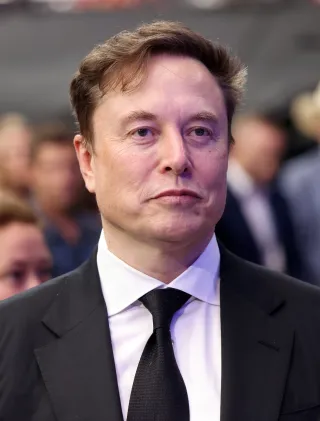
Takes SpaceX public in the largest IPO ever, then forecasts a trillion-dollar revenue run as he pitches AI compute in orbit.
I think SpaceX might be able to reach approximately $1T revenue in 2030.

Unveils seven in-house Microsoft models and a humanist superintelligence goal at Build.
Our ultimate goal is what we call Humanist Superintelligence. That means advanced AI systems designed to serve people and organizations, not replace them.
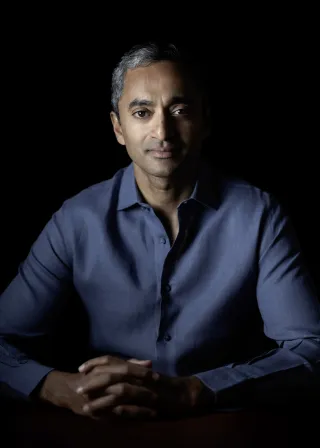
Turns full techno-optimist, calling AI's economic scorecard a 25 to 50 percent boost to US GDP.
Doubling the median income of 1MM Americans is nothing short of an economic miracle.

Lays out OpenAI's plan for broadly distributed AGI, with a human kept in the loop by design.
Entirely automating everything is not the future we want. It would be unfulfilling, and it would be dangerous.
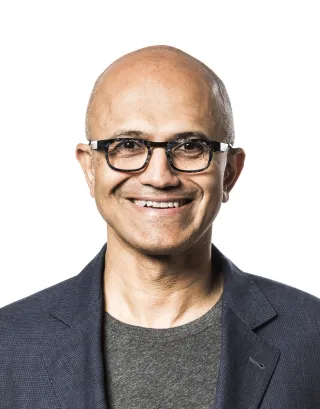
Argues the winners will own their AI learning loop, not whoever rents the single best model.
Human capital does not become less valuable as token capital grows. It only becomes more valuable! I believe human agency will be the driver of token capital growth.
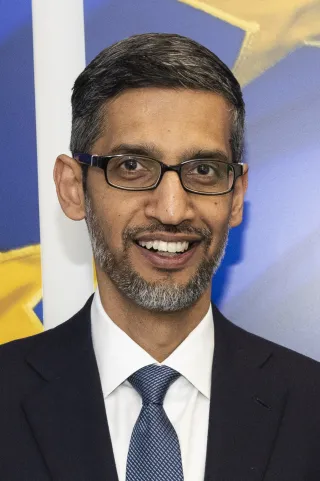
Frames AI as the most profound platform shift of our lifetimes, lifting Search and Cloud.
AI is the most profound platform shift of our lifetimes. It's lighting up every part of our business, driving an expansionary moment in Search, turbocharging Cloud and much more.
The voice keeping the week from tipping into pure euphoria.
Calls for binding, aviation-style testing of frontier models, with power to block unsafe releases.Cautious
Our first weekly read on what the people building AI are actually saying, with every claim linked to its source. The mood is bullish: agents in production, compute scaling hard, and investors calling it an economic miracle. The clearest caution comes from Anthropic on the safety side.
The striking thing about this week was not a single announcement. It was the agreement. Almost everyone we follow, from the people running the big labs to the investors funding them, is saying the same thing: AI agents that actually do work have arrived, and they are going to reshape how businesses run.
At NVIDIA's GTC keynote in Taipei, Jensen Huang put it plainly, that agentic AI has arrived and that useful AI has arrived, and framed every token a model generates as a unit of revenue while ramping the Vera Rubin platform into full production. Satya Nadella made a subtler version of the same point, arguing that the winners will not be whoever owns the best single model, but whoever builds the best ecosystem and learning loop around it. And Sundar Pichai, talking to Alphabet investors, called AI the most profound platform shift of our lifetimes, lighting up Search and Cloud rather than cannibalising them.
The labs are clear that capable does not have to mean unchecked. Sam Altman and OpenAI laid out a plan for broadly distributed AGI, with an automated AI researcher on the roadmap, while insisting that entirely automating everything is neither the goal nor safe and that people stay in the loop, setting direction and bringing judgement.
The most concrete bets this week were about infrastructure and money. Elon Musk took SpaceX public in the largest IPO in history, then forecast that SpaceX could reach roughly a trillion dollars of revenue by 2030, tying the bet to a plan to put AI compute into orbit. Mustafa Suleyman, now running Microsoft AI, unveiled seven in-house models and a humanist superintelligence goal, and said the compute used to train frontier models will rise about a thousandfold over the next three years, while insisting the aim is AI that serves people rather than replaces them.
On the economics, the investors are bullish too. Chamath Palihapitiya called the empirical scorecard on AI very positive, floating a 25 to 50 percent lift to US GDP and a future where AI-enabled upskilling doubles the income of a million American workers, an economic miracle in his words.
Not everyone is purely cheerleading, and the caution is the more interesting signal. Dario Amodei published a landmark essay, Policy on the AI Exponential, reversing Anthropic's earlier transparency-only line and calling for binding, aviation-style testing of frontier models, with the power for governments to block or reverse an unsafe release. It is a notable break from the week's euphoria, from the person arguably closest to the frontier.
It is time to go beyond transparency to more serious and binding regulation of AI.Dario Amodei, Anthropic
Strip away the trillion-dollar numbers and a simple message is left for an ordinary business. The people building this technology are telling you, in near unison, that capable AI agents are here now, and that the advantage goes to organisations that redesign how they work around them, not to whoever spends the most. You do not need an orbital data centre. You need to pick one or two real tasks, put a reliable agent on them, and build the habit.
That is the work we do at NextAura. We read the noise so you do not have to, then help Australian small businesses put the genuinely useful parts to work, the practical automation and AI that saves hours every week, while you get back to running the business. If you want a hand turning this week's headlines into something concrete, get in touch.
We log them now and revisit them later — a running ledger of the bets these operators are making out loud.
Dario Amodei: Powerful AI, a country of geniuses in a data centre, arrives.within 1 to 2 years
Essay, Policy on the AI ExponentialMustafa Suleyman: Compute used to train frontier models rises about a thousandfold.over the next three years
Microsoft AI blog, Building a hill-climbing machineChamath Palihapitiya: AI lifts US GDP by 25 to 50 percent.ongoing
X post, 9 June 2026Elon Musk: SpaceX revenue passes one trillion dollars a year.by 2031
X post, 14 June 2026We track what the people building AI are doing, then help Australian small businesses put the useful parts to work. The rest is noise.
Book a free consultation