What the people building the future are actually saying. We read their posts, talks and interviews each week, so you do not have to.
Edition 6week of 13 July 20269 min read
01Tech-landscape mood
→ steady vs last week
Bullish
84 / 100 bullishness
BearishNeutralBullish
The readThe people who showed up this week were shipping builders and confident essayists, so the board reads bullish. But the mood underneath shifted from last week's 'own the system, not the model' into something sharper: Satya Nadella's argument that merely using AI leaks the knowledge that makes you valuable, so the real contest is now over who captures the value, not who has the smartest model. The cautious voices (Dario Amodei among them) stayed quiet again, so read the number as the mood of the room that spoke.
02The voices
6 operators · one convictionscroll →
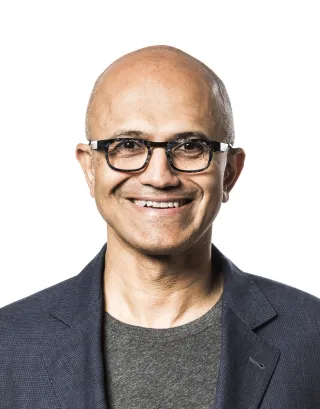
Satya Nadella
Microsoft
Bullish→steady
Publishes 'The Reverse Information Paradox': in the AI age it is the buyer, not the seller, who risks giving away the knowledge that makes them valuable, so every firm must own its own learning loop.
In the AI age, the buyer risks giving away knowledge, just in order to use what they bought.
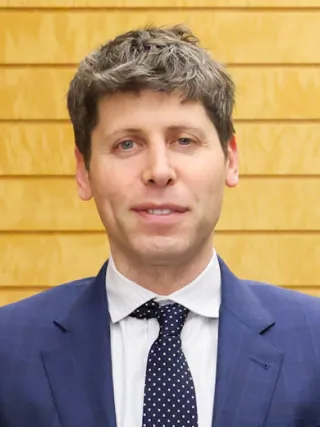
Rides GPT-5.6 Sol to 'best model in the world' claims and a 50-year maths proof, then drops the week's most surprising line: so far, AI looks net job-creating.
so far at least, i'm pretty sure AI has been net job-creating.
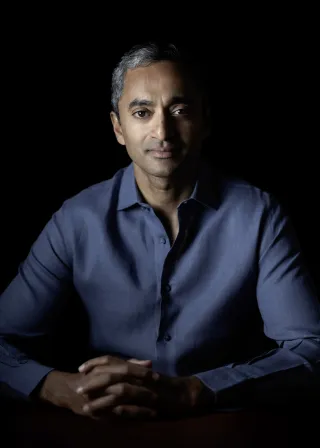
Doubles down on 8090's thesis: software licences ($1T) and the services wrapped around them ($4T) merge into a single AI-built $5T super-category.
Software license revenue is $1T annually. Services and T&M consulting around those licenses is $4T annually. All of this will merge into a new $5T super-category
Points AI at the planet: the first FireSat satellites are already spotting wildfires invisible to existing systems, aiming for updates every 20 minutes.
the first FireSat satellite has already spotted wildfires invisible to existing satellites
Frames healthcare as AI's most important job as Microsoft AI's health-chatbot paper makes the cover of Nature Health, and ships Ode, an AI 'poetry pharmacy'.
Healthcare is the most important application of AI: making humans happier + healthier.
You pay for intelligence twice. This week the smartest people in tech started arguing about the second payment.
As GPT-5.6 proved a 50-year-old maths conjecture and Grok 4.5 went 'Opus class', Satya Nadella published the sharpest idea of the week: in the AI age it is the buyer, not the seller, who quietly gives away the knowledge that makes them valuable. The model race is making raw intelligence nearly free. The fight that actually matters now is over who keeps the value.
There is an old idea in economics, from 1962, that has been sitting quietly on a shelf waiting for this exact week. The economist Kenneth Arrow noticed a paradox at the heart of selling information: you cannot know what a piece of knowledge is worth until you have seen it, but once you have seen it, you already have it for free. The seller is always one careless sentence away from giving the whole thing away. This week Satya Nadella took Arrow's sixty-year-old puzzle, turned it inside out, and pointed the sharp end at every business now buying AI. His argument is the most useful thing anyone in this room said all week, and almost nobody outside enterprise software noticed it.
The big conversation: the second payment
In an essay he called The Reverse Information Paradox, Nadella flipped Arrow. In Arrow's world the seller of information takes the risk. In the AI age, he wrote, the buyer risks giving away knowledge, just in order to use what they bought. You pay for intelligence twice: once with money, and again with the proprietary knowledge you must hand over to make the model useful. The better you want it to perform, the more of your edge you have to feed it. And the leak is almost invisible, he wrote, trace by trace, correction by correction, eval by eval. Every time your best person fixes the model's answer, that correction, the real institutional know-how a competitor could never buy, flows one way: out of your business and into someone else's learning infrastructure.
In consuming intelligence, you are creating intelligence. And what you create should belong to you.
The line to keep is the one Nadella built the whole essay toward: in consuming intelligence, you are creating intelligence, and what you create should belong to you. His conclusion is not caution but a build order: distribute the learning infrastructure to every firm so each one can control its own learning loop. Read past the corporate nouns and it is the same idea he floated last week with Frontier Co., now with teeth and an economist's spine under it. The value of AI, he is saying, will not settle with whoever has the smartest model. It will settle with whoever owns the loop where knowledge compounds. If that loop runs one way, value drains to the owners of the infrastructure. If you own the loop, it stays with you.
Where they disagree: is the value showing up, and for whom
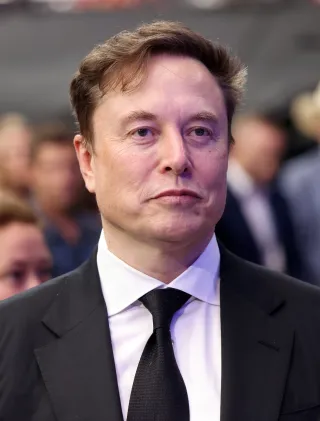
Nadella's essay only matters if the intelligence itself is getting genuinely, absurdly good, and this was the week that stopped being arguable. Sam Altman spent it marvelling that GPT-5.6 Sol is, by a lot of benchmarks, the best model in the world right now, with a public version producing a proof of a fifty-year-old maths conjecture. Elon Musk answered from the other trench, calling Grok 4.5 Opus class for browser use and the most politically neutral and objectively truth-seeking AI, which is what a frontier fight sounds like when two of the four leading labs are run by men who cannot stand each other. The raw material Nadella is worried about protecting is now cheap, superhuman in patches, and shipping weekly.
So the interesting fight is no longer about capability. It is about whether the value is actually landing, and where. Altman dropped the week's most quietly startling line, and it was not about a model at all: so far at least, i'm pretty sure AI has been net job-creating, adding that this was not what he expected, that he had thought by this level of capability we would have seen some impact. Set that next to Chamath Palihapitiya, who is betting a company on the opposite of gentle. His firm 8090, he wrote, is watching software licences worth $1T a year and the consulting and services stacked around them worth $4T a year merge into a new $5T super-category, built to order by AI instead of bought off a shelf. One man is surprised the disruption is so mild. The other is raising money on the promise it will be total. They are both looking at the same technology.
The reconciliation is Nadella's, whether he meant it or not. If AI is net job-creating today and a $5T reordering tomorrow, both can be true, because the question was never whether the value appears. It is who captures it. A four-trillion-dollar services market does not vanish; it moves. It moves toward whoever owns the loop that turns a company's own knowledge into software that improves every time it is used. Altman sees jobs holding because, so far, humans still own most of those loops. Chamath sees a super-category because he intends to build the machine that owns them instead. Nadella's essay is the referee, telling every business in the middle exactly what is being played for.
The quiet signals
While the loud men argued about who keeps the money, a quieter current ran through the week: intelligence pointed at things that are not chatbots. Sundar Pichai, who said almost nothing in his own voice about models, chose to talk about fire. Google's first FireSat satellites, he wrote, have already spotted wildfires invisible to existing satellites, with the constellation now aiming for near real-time updates every twenty minutes. Mustafa Suleyman spent his week on health, calling it the most important application of AI: making humans happier and healthier as Microsoft AI's paper on public use of a health chatbot made the cover of Nature Health, then shipping Ode, a 'poetry pharmacy' that reads you a poem for the moment you are in. Even Altman's proudest study this week was medical: physicians finding fewer flaws in the model's answers than in doctors' own.
And the people you did not hear from told their own story. Andrej Karpathy, two months into Anthropic, still has not posted a first-person word, letting a repost or two speak for him. Demis Hassabis amplified DeepMind's own release notes without adding a line. Dario Amodei, loud about AI policy a month ago, has been silent on his feed since, the field's designated worrier absent while everyone else counts the upside. Jensen Huang, never on social, let NVIDIA's newsroom do the talking. In a week when the argument moved from 'how smart' to 'who profits', the quietest people in the room were the ones who sell the shovels and the ones paid to worry. Draw from that what you will.
How a smaller business should read these minds
Here is the week translated out of billions and into something with your name on it. The most powerful person in enterprise software just told you, in an essay dressed up as economics, that using AI naively is a slow leak. Every time you pour your quotes, your customer notes, your hard-won corrections into a generic tool to get a better answer, you are making that tool smarter about your business, and you are getting nothing back but the answer. The intelligence is nearly free now, and getting freer, so it is not the prize. The prize is the loop: your knowledge, your corrections, your judgment, captured somewhere you own, compounding into a system that gets sharper every week. Altman thinks jobs are holding because people still own those loops. Chamath is building a company to take them. Nadella is handing you the instruction to keep yours. For a business in Ballarat or Bendigo, that is not abstract at all. It is the difference between renting a smart stranger and raising a system that knows how you work.
That is the work we do at NextAura. We read the week so you do not have to, then help Australian small businesses do the part the headlines skip: find the loop that is genuinely yours, wrap the now-cheap intelligence around it, and keep the value inside your business instead of leaking it, trace by trace, to a tool everyone else can rent too. The giants have told you where the money is going. It is not in the model. It is in the loop only you can own. If you want a hand turning this week's signal into something running in your business by next week, get in touch.
We log them now and revisit them later — a running ledger of the bets these operators are making out loud.
Satya Nadella: "Own your learning loop" becomes a recognised enterprise category: firms start demanding a real trust boundary so that model providers cannot learn from their usage one-directionally, and the market rewards vendors who let a company keep and compound its own corrections and evals rather than surrendering them.within 18 months
Chamath Palihapitiya: The $5T merger Chamath describes starts to show up in the numbers: custom, AI-built systems begin visibly eating into off-the-shelf SaaS licences and the T&M consulting stacked around them, with at least one large enterprise publicly replacing a marquee software contract with a bespoke build.the next few years
Sam Altman: AI stays net job-creating in aggregate through this capability cycle rather than triggering the sharp displacement many expected, with headline employment holding even as specific task mixes shift under it.this cycle
Mustafa Suleyman: A generalist AI chatbot becomes a routine, openly-acknowledged first port of call for everyday health questions, with peer-reviewed evidence (of the kind Microsoft AI just put on the cover of Nature Health) accumulating faster than the medical profession's guidance for it.within 2 years