What the people building the future are actually saying. We read their posts, talks and interviews each week, so you do not have to.
Edition 5week of 6 July 20268 min read
01Tech-landscape mood
↗ rising vs last week
Bullish
86 / 100 bullishness
BearishNeutralBullish
The readA holiday-shortened week, and the people who showed up were all builders shipping product and raising money, so the board reads unusually bullish. The bigger signal is what they agreed on: Satya Nadella and Chamath Palihapitiya, from opposite ends of the industry, bet their newest flagship on the same idea, that the model is becoming a commodity and the value has moved to the system you build on top of it. The field's cautious voices, Dario Amodei among them, stayed quiet, so read the number as the mood of the room that spoke, not the whole field.
02The voices
4 operators · one convictionscroll →
Chamath Palihapitiya
Social Capital
Bullish→steady
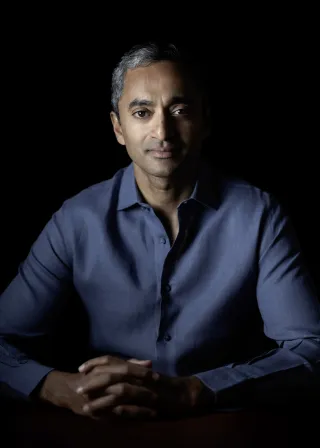
Goes all-in as CEO of 8090 with a $135M raise, pitching an AI Software Factory that builds custom systems for everyone from regulated giants to solo founders, and calling AI the grand equaliser.
AI can be the grand equalizer. It is the thing that can give everybody a shot, and I would like to help it achieve that potential.
Unveils Frontier Co. and a thesis for the decade: the firm of the future is a learning loop where human capital and token capital compound, and every company builds its own AI.
The future of the firm is a learning loop in which human capital and token capital compound.
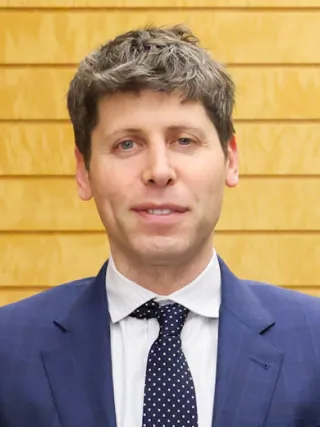
Marvels that GPT-5.6 is discovering new math, placing a model's novel output next to his toddler's first two words as the two cognitive feats that amaze him this week.
our older kid put two words together for the first time and i am approximately as amazed by this cognitive feat as i am by GPT-5.6 discovering new math
Everyone is racing to make intelligence free. The smartest money this week bet on what you build with it.
In a holiday-shortened week, Satya Nadella launched Frontier Co. and Chamath Palihapitiya went all-in on his AI Software Factory, and from opposite ends of the industry both said the same thing: the model is becoming a commodity, so the edge is now the system you build on top of it. Meanwhile Google, xAI, OpenAI and Anthropic made the raw intelligence cheaper and more abundant than ever, which is exactly what makes the point.
Two men who could not be less alike said the same thing this week, from opposite ends of the industry, and almost nobody put the two lines next to each other. One runs the most valuable software company on earth. The other is a venture capitalist who just talked himself back into a day job. In a week thinned out by fireworks and long weekends, they both landed on a single, unfashionable idea: the AI model is about to become a commodity, and the money is no longer in owning the smartest one. It is in owning what you build on top of it.
The big conversation: rent the intelligence, own the system
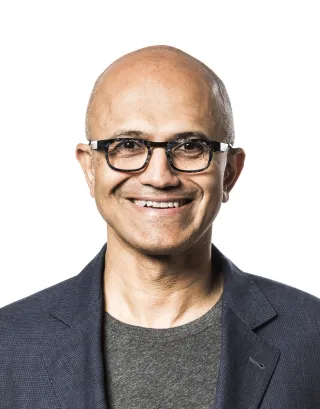
Start with Satya Nadella, who does not usually deal in slogans. Announcing a new venture he called Frontier Co., he wrote that the future of the firm is a learning loop in which human capital and token capital compound, and that the aim was to help every enterprise build its own AI capability, turning its knowledge, workflows and judgment into its own systems that continuously improve. Read past the corporate nouns and there is a genuinely radical claim inside. The worth of a company, Nadella is saying, will soon be measured by how well it turns its own people's judgment into software that gets a little better every time it is used. Not the model it rents. The loop it owns.
Now put Chamath Palihapitiya next to him. On the same weekend he announced he was returning to a full-time operating role for the first time since Facebook, taking the CEO seat at a company called 8090 and raising a $135M Series A led by Salesforce Ventures. 8090 sells what he calls an AI-enabled Software Factory, and it works with the hardest customers he could find: healthcare, insurance, aerospace, defence, the US government. The pitch is not a smarter chatbot. It is building whole custom systems for organisations that cannot tolerate error, then taking that same playbook down-market until, in his words, it is valuable to everyone, from SMBs to solo founders. His reason for bothering is the line to keep. AI, he said, can be the grand equalizer, the thing that gives everybody a shot.
The model is becoming the cheapest part. The value is moving to the system you build on top of it.
So here are a Microsoft CEO and a returning operator, worlds apart in temperament, both betting their newest flagship effort on the same wager: that the durable advantage is not access to intelligence, because intelligence is about to be everywhere and nearly free, but the proprietary layer you wrap around it. Your data. Your process. Your judgment. Chamath's 8090 exists, he wrote, to help customers find and accelerate their edge, which is a polite way of saying: do not hand your edge to a tool everyone else can rent too.
Where they disagree: is the model the moat, or the commodity
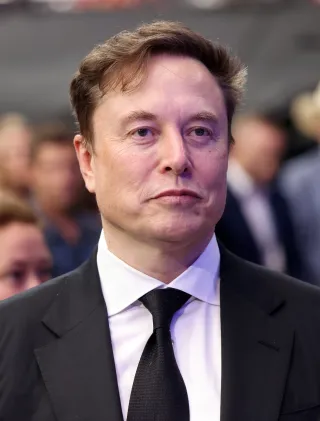
The counter-argument arrived, conveniently, as a price list. While Nadella and Chamath talked about the layer above the model, the model-makers spent the week making the model itself absurdly cheap. Google shipped Nano Banana 2 Lite and Gemini Omni Flash, an image model that renders in under four seconds for about three cents a thousand, and a video model at ten cents a second that promptly went to the top of the public video leaderboard. Elon Musk let xAI's Grok Imagine loose over the holiday, and by Sunday half of X was posting AI-made montages built with it. Sam Altman, in between fireworks tweets, marvelled that GPT-5.6 is discovering new math, a sentence he placed, touchingly, right next to his toddler saying its first two words. Even Anthropic, the industry's designated worrier, spent the week shipping: a new Claude Science workbench aimed at accelerating discovery in the lab, and the quiet return of its Fable 5 model to global availability after a fortnight of Washington negotiations.
Line those up and the disagreement sharpens into something useful. One camp is racing intelligence toward zero. The other says: good, that is exactly what makes our layer valuable. They are not really opposed. If a token costs a fraction of a cent and an image costs three, the model stops being anybody's moat, and the only thing left to defend is what you alone can build with it. The people flooding the world with cheap capability and the people telling you to build your own system are describing two halves of one trade. The raw material got cheap. The finished good, the thing shaped to your business, did not.
The quiet signals
The most telling posts of the week were barely posts at all. Andrej Karpathy, mostly silent since joining Anthropic, spent the week reposting rather than writing, and what he chose to amplify was revealing: Etched coming out of stealth with more than a billion dollars of contracts and chips built to do one thing, run inference, faster and cheaper than a general-purpose GPU. The layer beneath the model is specialising too, which is how you get to three cents an image. Cheap intelligence is not an accident. It is becoming an industry with its own supply chain.
And the two men who run the search giants, the companies with the most to lose from any of this, said almost nothing in their own voice. Sundar Pichai posted July 4 fireworks and left the model launches to his product teams. Demis Hassabis amplified DeepMind's leaderboard wins without adding a line of his own. Mustafa Suleyman and Dario Amodei, both loud a fortnight ago, went quiet on their own feeds and let their companies do the talking. In a week when the ground moved, the quietest people in the room were the ones sitting on the largest incumbencies. Draw from that what you will.
How a smaller business should read these minds
Strip the billions out and there is an instruction in here with your name on it. The most powerful people in technology just spent a holiday week telling you, in different words, that merely having AI is about to be worthless, because everyone will have it, and the only thing that will matter is what you build with it that no one else can. For a business in Melbourne or Bendigo that is not abstract. It means the generic chatbot bolted onto your website is the commodity, not the asset. Your asset is the thing only you know: how you quote a tricky job, how you calm a nervous customer, the checklist your best employee runs in their head without thinking. Nadella's line, the one about human capital and token capital compounding, is a small-business strategy if you read it plainly. Take your best person's judgment, wire it into a system with intelligence that now costs cents, and let it get sharper every time you use it. That is a moat you can actually own, and it gets cheaper to build every month.
That is the work we do at NextAura. We read the week so you do not have to, then help Australian small businesses do the part the headlines skip: find the one process that is genuinely yours, wrap the now-cheap intelligence around it, and turn it into a system you own and improve, not a subscription you rent and hope about. The giants have told you where the value is going. It is not in the model. It is in what only you can build. If you want a hand turning this week's signal into something running in your business by next week, get in touch.
We log them now and revisit them later — a running ledger of the bets these operators are making out loud.
Satya Nadella: "Build your own AI" overtakes "adopt an AI tool" as the dominant enterprise posture: spend shifts from renting general chatbots to building owned systems that turn a company's own knowledge and workflows into compounding AI, with Microsoft's Frontier Co. among the vehicles.within 18 months
Chamath Palihapitiya: The AI Software Factory model, custom-built systems replacing off-the-shelf SaaS, moves down from the largest regulated enterprises to SMBs and solo founders and becomes a real channel, not just an enterprise-only pitch, within the next few years.the next few years
Sam Altman: Frontier models cross from assisting mathematicians to autonomously producing genuinely new, verified results, and "the model discovered new math" becomes a routine, checkable claim rather than a marvel.this year