What the people building the future are actually saying. We read their posts, talks and interviews each week, so you do not have to.
Edition 4week of 29 June 20269 min read
Listen to this edition
Narrated by NextAura
0:00 / --:--
01Tech-landscape mood
→ steady vs last week
Cautiously optimistic
80 / 100 bullishness
BearishNeutralBullish
The readThe builders have never been more confident in the technology: Jensen Huang declared the return-on-investment debate over, Grok closed on Opus, and OpenAI shipped its strongest model yet. But the mood ticked just under last week's outright bullishness, because for the first time a US frontier launch happened on the government's terms, and Dario Amodei's lonely call to be able to block a deployment suddenly reads like policy.
02The voices
7 operators · one convictionscroll →
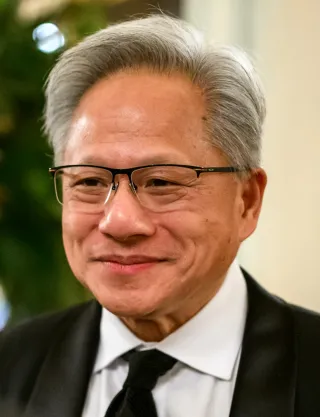
Jensen Huang
NVIDIA
Bullish→steady
Tells shareholders the AI payoff question has been answered: the machines now do useful work, and every token they generate is a profit unit.
Nvidia systems may not be the cheapest to purchase, but Nvidia generates the lowest cost tokens, the highest token throughput, and the most revenues.
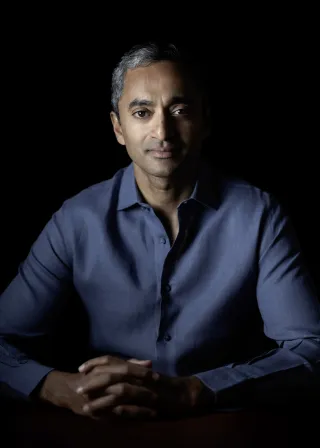
Bets that distributed inference will let people outside the AI economy earn from it, and keeps arguing productivity, not redistribution, is what lifts everyone.
I am pretty convinced that there will be a path for distributed AI inference and this will create a novel way for folks who may not otherwise be in the AI economy to make money from it.
Publishes the principles his Microsoft AI team lives by, arguing disciplined, evidence-led method beats heroic chaos, as his in-house image model cracks the global top three.
A disciplined, evidence-based, careful methodology compounds faster than heroic and chaotic improvisation.
Calls the agent the third great redesign of how we use AI: not a website or an app, but a persistent teammate that joins the org and does the work.
This third one is that it is a self-contained, persistent, asynchronous entity with org-wide tools and context, working alongside teams of humans. It really takes a while to wrap your head around it, but it works and it is awesome.
Ships his strongest model yet, then has to launch it in limited preview at the government's request, and says plainly that pre-clearance should not become the norm.
At the request of the US government, it is launching today in limited preview instead of the open access launch we were planning on.
The voice keeping the week from tipping into pure euphoria.
Dario Amodei
Anthropic
The field's lone brake looks suddenly prescient: the very power he asked for, to block a frontier deployment, was used on a rival this week.Cautious
04The takeaway
This week’s read · NextAura
The state walks onto the frontier: a government gated an AI launch the same week the models got cheap enough to be everywhere
For the first time a US frontier model shipped on the government's terms, not the lab's. While Washington gated OpenAI's strongest model, Grok closed on Opus, GPT-5.6 Terra arrived at half the price, and the talk turned from AI that speaks to AI that works. Dario Amodei's least fashionable idea suddenly looks like policy.
For two years the makers of artificial intelligence argued about whether the state should ever stand between a finished model and the public. This week the argument ended, and not the way the labs wanted. OpenAI built its most capable system yet, and then, on the government's instruction, could not simply release it. Somewhere in that decision a line was crossed that will not be uncrossed, and almost nobody said so out loud, because they were too busy shipping.
The big conversation: a government walked onto the frontier
The most powerful company in the field just shipped on someone else's terms, and the someone was the state.
The mood around it was almost comic in its timing. Days before the gating, Elon Musk, who now houses xAI inside SpaceX, was riffing about what to call the AI industry regulatory authority, a joke acronym pronounced “ay yai yai.” By the weekend the joke had a straight face. The men who build these systems have spent two years insisting the frontier could police itself. This was the week the referee walked onto the field.
Where they disagree: wall the frontier, or let it diffuse
Here is the tension that will define the next year, and it is not optimism against doom. Everyone here is an optimist about the technology. The split is about whether the frontier should be concentrated and controllable or cheap and everywhere, and both forces accelerated in the same seven days. One camp is building a gate. The other is tearing down the toll booth.
On the diffusion side the evidence piled up fast. Musk said Grok 4.5, in private beta, shows performance close to, perhaps exceeding Opus, which is to say a third lab is now trading blows at the very top. OpenAI's own announcement buried a quieter bombshell under the government drama: alongside flagship Sol came Terra, a model with the previous generation's performance at half the price. Mustafa Suleyman's in-house image model at Microsoft cracked the global top three. And Chamath Palihapitiya pushed the idea furthest, arguing for a path for distributed AI inference that lets people who are not otherwise in the AI economy earn from it. His throughline all week was that productivity growth, not taxation, has been the most proven way to fix inequality and poverty, a bet that the spoils spread on their own if you let the technology spread first.
So the frontier is being walled at the exact moment it is leaking everywhere. Capability is getting cheaper by the month, open weights are downloaded by the hundred million, and a third and fourth model now sit near the top of the charts, all while the single most capable release of the week could only go out under guard. That contradiction is the real headline. The cutting edge is becoming a regulated substance, and the merely excellent is becoming a commodity, at the same time.
The quiet signals: from AI that talks to AI that works
Underneath the politics, the framing of what AI even is shifted, and three people said the same thing from three different chairs. Jensen Huang told NVIDIA's shareholders the long argument over whether AI pays for itself has been answered, because the machines now do useful work and every token they produce is a unit of profit. Andrej Karpathy, quiet since joining Anthropic, described the same shift as a design revolution: the agent, he wrote, is a self-contained, persistent, asynchronous entity with org-wide tools and context, working alongside teams of humans, the third great redesign of how we use these models after the website and the app. And Satya Nadella, ever the plumber, just shipped the mundane proof of it: skills to Copilot for Excel, giving teams a new way to scale their expertise across every workbook. Talk to it, download it, chat with it: that era is closing. The new question is what it does while you sleep.
The most useful signal of the week was the least loud. Mustafa Suleyman published the principles his Microsoft AI team works by, and the line a business owner should tape to the wall was this: a disciplined, evidence-based, careful methodology compounds faster than heroic and chaotic improvisation. His rule for it was blunter still, no narratives without numbers. In a week of trillion-dollar narratives, the person running one of the largest model teams on earth was quietly insisting that the moat is method, not magic. Meanwhile the two giants of search said little. Google's Gemma open models passed two hundred million downloads, the diffusion story in one number, but Demis Hassabis only amplified it rather than adding his own line, and Sundar Pichai stayed nearly silent again, the agentic Gemini era he promised in May still waiting on its flagship. In a week this consequential, choosing not to speak is its own position.
How a smaller business should read these minds
Strip away the trillion-dollar talk and there is a plain instruction folded inside this week for anyone running a real business. Do not build your plans on access to the single most powerful model, because that is exactly the thing the state just showed it can gate. Build on the layer that is getting cheaper and more abundant by the month, the merely excellent model that costs half what it did, the open weight you can run yourself, the workhorse that is everywhere. That is where the work gets done, and nobody can pull it from under you. And take the framing shift seriously: the value is no longer in chatting with AI, it is in giving it a job. The winners this year will be the ones who stop treating it as a clever oracle to ask, and start treating it as a teammate that quietly works your process while you are doing something else.
That is the work we do at NextAura. We read the week so you do not have to, then help Australian small businesses do the unglamorous part: pick the workhorse model, give it a real job inside your process, prove the saving with numbers, and keep your data yours so you are never locked in. The frontier may end up behind glass. The useful part is already on the shelf, cheaper than last month. If you want a hand turning this week's signal into something running in your business by next week, get in touch.
We log them now and revisit them later — a running ledger of the bets these operators are making out loud.
Sam Altman: OpenAI restores broad access to GPT-5.6 within weeks, but government pre-clearance of frontier launches becomes a recurring feature of US AI releases rather than a one-off.this year
Dario Amodei: Mandatory third-party safety testing with the power to block or revoke a frontier deployment shifts from Anthropic proposal to real government practice, with the GPT-5.6 gating as the first sign.within a few years
Jensen Huang: The AI return-on-investment debate stays settled: token demand and compute spend keep compounding rather than plateauing, as useful agentic work becomes the main driver of demand.this decade
Chamath Palihapitiya: Distributed AI inference emerges as a real channel for people outside the AI economy to earn from it, not just a thesis, within the next few years.the next few years