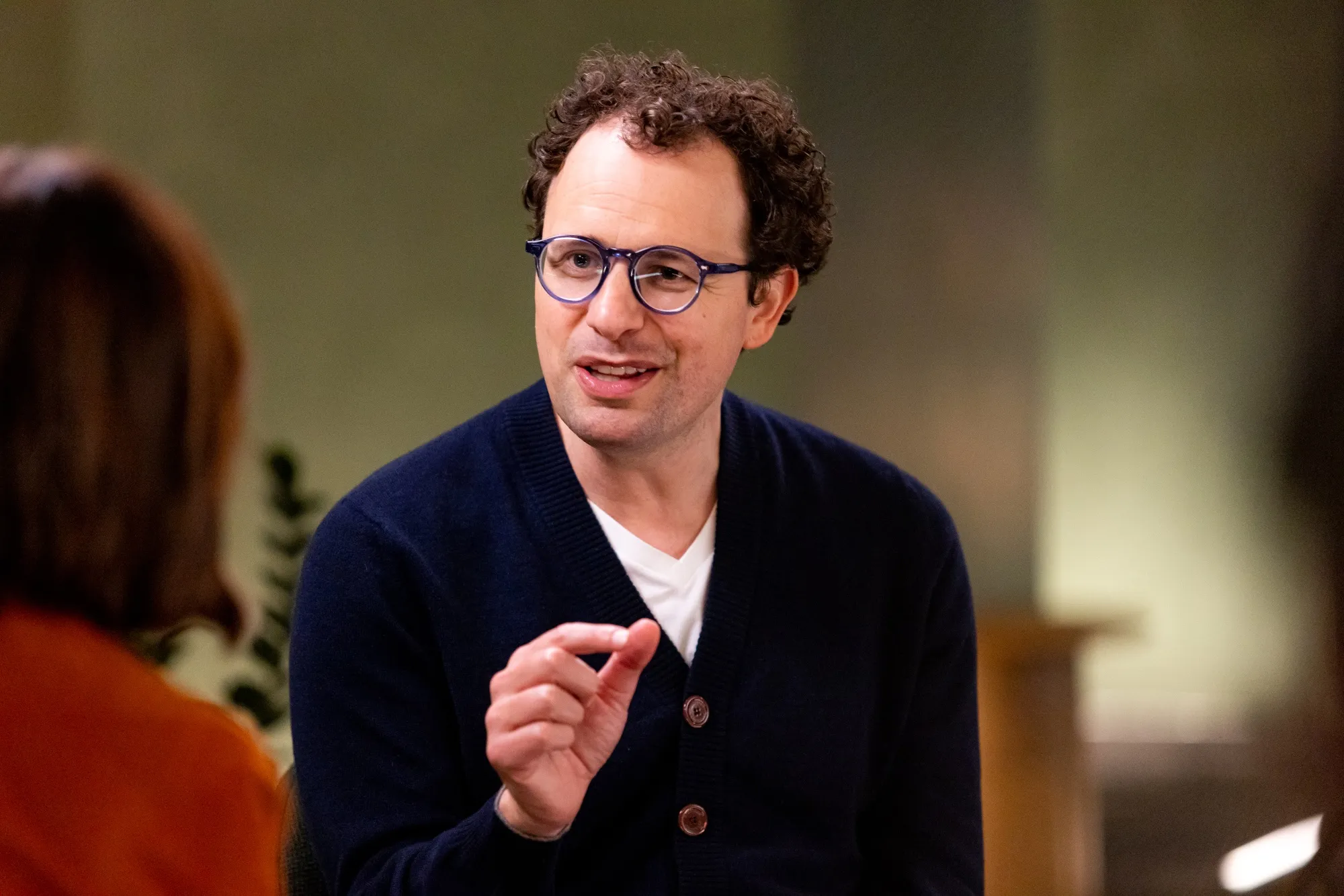
On 17 June 2026, Anthropic chief executive Dario Amodei sat down with Bloomberg's The Circuit for an hour, and the part every small business owner should hear was about jobs. Anthropic builds Claude, one of the AI models now quietly doing real work inside companies, so when its founder talks about what AI does to employment, he is describing a wave his own product is helping to create.
His message was blunt, but not the doom headline you may have seen clipped on social media. AI, he warned, could produce "this very unusual combination of very fast GDP growth and high unemployment." A year ago he put a number on it: half of entry-level white-collar jobs gone within one to five years. In this interview he neither walked it back nor leaned into the scare. The real point, he said, was always that "this is an order of magnitude for how crazy things could be," and that he has always paired the warning with what to do about it. "My message is just definitely not doom is coming," he said. "This is something that we should see coming, and that we need to actually respond to positively."
For an Australian small business, the value is not in the forecast. It is in the choice he says every company is now walking into, and which side of it you pick will matter more than which AI tool you buy.
The choice every business is about to make
Amodei said Anthropic watches its business customers face the same fork in the road, over and over. They face the choice, he said, of whether to "save costs, which often means hiring less people," or to "do more things with the same amount of resources." His team pushes them towards the second. "We always, when we can, try to push them to doing more," he said, to "hire the same number of people, or maybe even more people, but just do new things."
Should I save costs, which often means hiring less people? Or should we do more things with the same amount of resources?Dario Amodei, Anthropic CEO, on Bloomberg's The Circuit, June 2026
That is the whole game for a small team. A business that uses AI to quietly delete two roles ends up the same size doing the same things, only cheaper, right up until a competitor who chose the other path eats its lunch. A business that uses the same AI to take the admin, research and follow-up off its people frees them to serve more customers, open a new line, or finally do the work that was always getting bumped. Same wage bill, bigger business. Amodei's word for it was "positive sum," and he was clear the pie is about to "expand a lot." The catch, in his words, is that it is "just a matter of finding them fast enough."
Make a list of your moats
The sharpest practical advice in the hour was aimed at software companies, but it travels to any business. Do not be complacent, he said, and do not ignore it: "Make a list of all your moats, and be very aware that some of them are going to go away, while others are going to become relatively more important." The ability to do a thing faster or cheaper than the next person is the moat AI erodes first. What survives, he argued, is harder to copy: customer relationships, deep local know-how, and the human-centred work people actually want a person for.
He was equally blunt about who loses. "Those who don't adapt, who put their heads in the sand, who don't see what's coming, they're gonna have a really hard time." Not because AI is coming for them in particular, but because their competitors will have answered the choice above before they did.
- Same headcount, more output: the hours your team loses to admin, quoting, data entry and chasing information get handed back, and spent on customers instead.
- Entry-level work changes shape rather than vanishing: the repetitive tasks become the work your people oversee, not the jobs you cut.
- Your real moat gets sharper: relationships, local knowledge and the human touch become more valuable as the routine work gets commoditised.
- Services you could never afford to staff become viable, because the pie, as Amodei put it, is getting bigger, not smaller.
None of this is automatic. Amodei's own framing is that there is going to be "a hell of a lot of disruption, but things will also adjust," and that the hard part is solving the "matching problem" quickly enough. He pointed to the work Anthropic publishes on exactly this, including its economic index tracking how AI is landing across real jobs. The debate is live and serious: NVIDIA's Jensen Huang has pushed back that Amodei conflates tasks with jobs, and voices like Ethan Mollick have spent years showing the gains are real but unevenly spread. The owners who do well will treat this as a question to answer this year, not a headline to scroll past.
We have already seen the upside of the "do more" path play out: a recent story of a five-person team that turned hours of admin into minutes is the same move at small scale, AI carrying the gathering and the first pass of judgement so people can get on with the work only they can do.
The takeaway for a small Australian business is not to panic, and definitely not to start cutting. It is to look honestly at where your week disappears, decide which of those hours AI should carry, and reinvest the people you free up into the parts of the business only people can do. That is a strategy question before it is a technology one.
This is the work we do at NextAura. We help Australian small businesses pick the "do more" path, building the AI agents and automations that go where the hours quietly vanish, and steering them so your team ends up doing better work, not less of it. If you would rather have someone who tracks this daily map it to your business, get in touch and we will take it from there while you get back to your customers.
 Strategy